
 magazine
Through the Wall of Worry
An honest, optimistic essay about the anxiety of the AI transition, jobs, privacy, control, and trust, and a credible path through it: ownership, consent, transparency, and keeping the human at the center. Confident, not naive.

Every large change arrives wrapped in worry, and this one is larger than most. When a new technology can suddenly write, reason, and act, the ground shifts under a lot of people at once, and the honest first reaction is not excitement. It is a knot in the stomach. Will my work still matter? Who is watching? Who decides? Can any of this be trusted? Investors have an old phrase for markets that keep rising in spite of anxiety: they climb a wall of worry. We think this transition is one too, and that the way through is not to pretend the wall is not there. It is to name it plainly and then find the door.
So let us name it. We are not interested in the kind of optimism that only works if you squint. If the case for a better future cannot survive an honest look at the fears, it is not worth much.
Name the worries plainly
Jobs. The fear that the thing you spent years getting good at can now be done, partly or wholly, by a machine, and that the change will come faster than anyone can retrain for. This is not paranoia. Real work is being reshaped right now, and telling people it will all be fine is not an answer. It is a dodge.
Privacy. The fear that systems already know too much about us and are about to know far more, that intimacy with a machine is just a wider funnel into the same old extraction. After twenty years of being the product, people are right to be wary of anything that asks to understand them more deeply.
Control. The fear of handing decisions to something you cannot see inside, that acts on your behalf in ways you did not fully authorize and cannot easily undo. An agent that does things for you is only good news if it is genuinely yours to direct and to stop.
Trust. The fear, underneath all the others, that the people building this do not have your interests at heart, that the incentives point at capturing you rather than serving you, and that the polished language is there to make the capture feel friendly.
Those are real, and they deserve better than reassurance. What they deserve is a design that takes each of them seriously and answers with something you can inspect. That design is the door.
The door is ownership
Most of the fear traces back to a single root: the power is real, but it belongs to someone else. The worry about jobs, privacy, control, and trust all get sharper when the intelligence and the information sit with a distant party whose interests are not yours. Flip the ownership and the whole picture changes character.
When the intelligence is yours, the jobs story turns from replacement toward leverage. An agent that answers only to you does not compete with you for a paycheck; it multiplies what one person can do, which is how ordinary people start to build things that used to require a whole company. When the information is yours, the privacy story turns from surveillance toward stewardship: your data lives in a vault you hold, and being understood deeply is safe because the understanding stays under your command. Ownership does not make the worries vanish. It changes who the power serves, and that is the change that matters.
Most of the fear traces to one root: the power is real, but it belongs to someone else. Change who owns it and the whole picture changes character.
Consent, transparency, and the human at the center
Ownership is the first plank. Three more hold up the bridge.
Consent answers the control fear directly. Nothing your agent does with your information happens without a specific, revocable yes. This is the everyday work of the Hushh Protocol: not a checkbox you click once and forget, but a living permission you grant, narrow, and take back as you like. An agent you can stop is an agent you can trust to start.
Transparency answers the trust fear. Every meaningful action leaves a receipt, a plain record of what was done, with what, for whom, and why. You should never have to take our word for how your information was used, because you can read the log. We would rather be caught being honest than admired for a promise. Where something is still being built, we say so; where a hard problem is unsolved, we name it instead of papering over it.
The human at the center answers the jobs fear at its root. The purpose of all of this is not autonomy for its own sake. It is a person, more capable, still in charge. The agent does the work; the human holds the wheel, keeps the judgment, and gets the benefit. Build it the other way around, with the human orbiting the machine, and you have recreated the exact thing everyone is right to fear.

Confident, not naive
We want to be careful here, because there is a lazy optimism that does real harm. It waves away the losses, promises that markets will sort everything out, and leaves the people actually caught in the transition to fend for themselves. That is not our optimism. Ours is the kind that has to earn itself against the facts.
We do not think ownership, consent, and transparency automatically fix everything. There will be jobs that change painfully, mistakes to correct, and pressure at every step to quietly trade a little of the user's sovereignty for a little of the company's convenience. We are saying something narrower and, we think, more durable: that a future where people own their intelligence and their information is a future they can steer, and a future you can steer is one you can make better on your own terms. The failure modes are real, but they are ours to catch, in the open, with receipts.
Break through to the other side
There is a moment in any hard passage where the fear is loudest right before it breaks. The wall of worry feels tallest just before you are through it. The mistake is to read that height as a verdict, to decide that because the anxiety is real the future must be bleak. It does not follow. Fear is information about the stakes, not a forecast of the outcome.
The other side of this passage is not a world without machines. It is a world where the machines answer to the people who use them. Where your intelligence compounds for you, your information works for you, and the tools that once studied you now serve you, with your consent and on your terms. That world is not guaranteed. It has to be built, plank by plank, by people who take the worries seriously enough to design around them. That is the work in front of us, and we are optimists about it, not because we ignore the wall, but because we can already see the door. Come through it with us.

Image credits
With gratitude to those who share their work freely. Photographs are used under the Unsplash License; historical artwork is public domain.
- Cover and closing, a person at golden hour: photo by Soroush Karimi on Unsplash.
- Community, friends outdoors: photo by Vitaly Gariev on Unsplash.
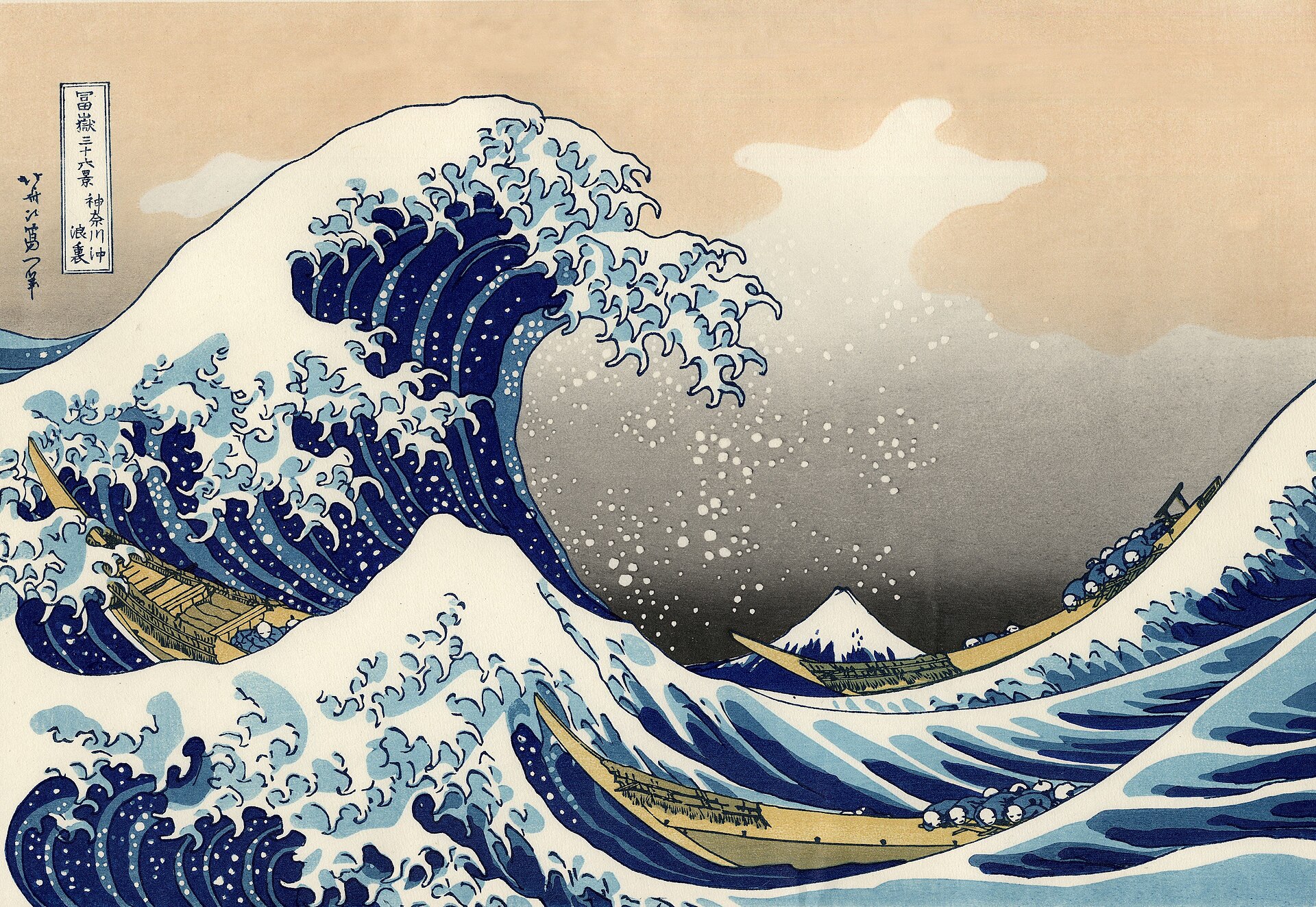
- The Great Wave off Kanagawa by Katsushika Hokusai (c. 1831), public domain via Wikimedia Commons.
The hussh magazine
Written by Manish Sainani, and built to read beautifully here — and to travel to 🤫 One on your phone, your glasses, and visionOS, as one immersive magazine you own.