
 magazine
Your Information Is Your Business
For two decades the deal was free things for data, and the people who create the information owned none of the value. A candid essay on why your information should be your asset, held in a vault you own and worked on your behalf by a private 🤫 Agent One, with consent and receipts through the Personal Consent and Hushh Protocol.

For about twenty years the deal was simple, and almost nobody read it. You got things for free, or close to it: search, maps, mail, a place to keep your photos, a way to talk to everyone you know. In exchange you handed over a running record of your life, your clicks, your locations, your purchases, your late-night questions, your quiet preferences, and you agreed, usually without noticing, that someone else could turn all of it into a business. It was a good trick. The people who created the information, ordinary humans living ordinary days, ended up owning none of the value it produced.
We think that deal is ending, and that the thing replacing it is better and more honest. The short version is this: your information is your business. Not a byproduct of using an app. Not exhaust. A real asset, one you own, organize, and put to work on your own terms.
The deal nobody read
Free was never free. It was paid for by attention and by data, and both came out of you. The genius of the arrangement was that the cost felt like nothing, because it was spread across billions of small moments and never showed up on a bill. Meanwhile the value pooled somewhere else entirely, in a handful of companies that got extraordinarily good at knowing you well enough to sell that knowledge to whoever wanted a piece of your next decision.
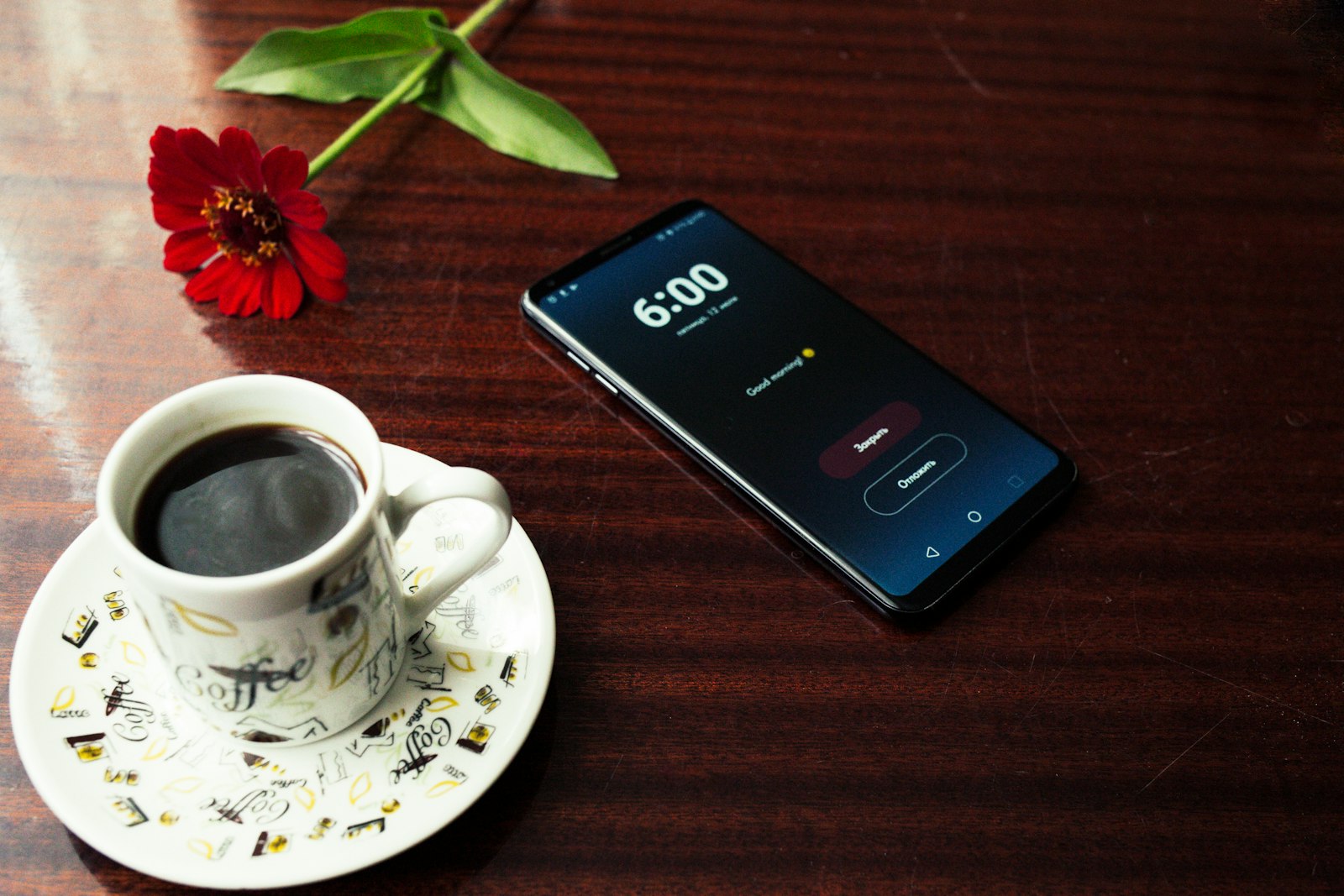
Here is the part worth sitting with. You are the author of that information. You lived the day that produced it. You made the choice, took the trip, asked the question, formed the taste. If any of it has value, and clearly it has enormous value, the plain moral fact is that the value should start with you. Somewhere along the way we accepted the opposite as normal, that the author of a life should be the last person to benefit from the record of it.
Information as an asset you own
An asset is something you hold, that produces value, that you can choose to use, keep, or share. Land is an asset. A skill is an asset. Your information should be one too. Not in the grim sense of selling scraps of yourself to the highest bidder, but in the plain sense of ownership: it is yours, it is organized, and it works for you before it works for anyone else.
In practice that means a few concrete things. Your data lives in a vault you control, not scattered across a hundred accounts you have long since forgotten. It is structured well enough to be useful, so it can answer questions and get things done rather than just sitting in a folder. And nothing leaves that vault without your explicit say-so, with a record of exactly what was shared, with whom, and why.
You are the author of your information. If it has value, and it does, the value should start with you.
An agent that works for you
Ownership on its own is not enough. A vault you never open is just a nicer prison for your data. The point of holding the keys is to put the asset to work, and that is the job of 🤫 Agent One: a private agent that answers only to you, working from your vault, on your behalf, around the clock.
The difference from the old arrangement is not cosmetic. A traditional platform studies you so it can sell to you. Your own agent studies you so it can serve you. Same understanding, opposite loyalty. When the intelligence that knows you best belongs to you, its incentive is finally aligned with your life: pay the bill on time, find the document, plan the trip, remember the person, negotiate the better deal, and never once forget whose life it is.

Consent and receipts, made real
A promise that your data is yours is worth exactly nothing without a mechanism that makes it true. That mechanism is consent, and it has to be specific, revocable, and logged. This is the work of the Personal Consent and Hushh Protocol, our name for the rules and the plumbing that turn ownership from a slogan into something you can verify.
The idea is straightforward. Every time a piece of your information is used or shared, there is a consent event behind it: this data, for this purpose, with this party, for this long. And every time, there is a receipt, a durable record you can read after the fact. Consent decides what happens; the receipt proves what happened. Together they replace trust-me with show-me. If you cannot see who touched your information and why, you do not really own it, no matter what the terms of service say.
Four things stay firmly in your hands, and consent is the hinge for all of them:
- Your information lives in a vault you own, shared only with a clear yes and a receipt for every access.
- Your circle is yours to define, with each person seeing only what you decide they should.
- Your knowledge, everything you gather and figure out, compounds for you rather than for a platform.
- Your ability to share means you can hand any of it to the right person as easily as saying so, and take it back just as easily.
What changes when the creator holds the keys
Flip the ownership and four quiet things change at once. The first is dignity. There is a real difference between being the product and being the customer, and people feel it even when they cannot name it. Owning your information restores the simple sense that you are a person being served, not a resource being mined.
The second is leverage. Information you control is information you can point at the problems that matter to you, and, when you choose, offer to a business on fair terms instead of surrendering by default. The third is fair value, which follows naturally: when the exchange is explicit, it can be honest, and honest exchange tends to pay the author rather than route around them. The fourth is safety. Data that stays in a vault you control, shared deliberately and sparingly, is simply harder to lose, leak, or turn against you than data copied endlessly across systems you never see.

Honest about the road
We would rather be plain than impressive, so here is the honest state of things. The principles are settled and the architecture is real: a vault you own, an agent that answers only to you, consent and receipts through the Personal Consent and Hushh Protocol. Parts of this are live today and parts are still being built. Getting a person to fair value for their information, at scale and without a new kind of exploitation sneaking in the side door, is genuinely hard, and we will say so as we go rather than pretend otherwise.
What we will not do is drift from the point. The point is that the person who creates the information should own it, benefit from it, and stay in control of it. Everything we build has to pass that test. If a feature makes the company money by quietly making the user less sovereign, it does not ship. That is not a marketing line. It is the whole reason 🤫 exists.
Your life is yours. The record of it should be too. Come own it with us.
Image credits
With gratitude to the photographers who share their work freely. All photographs are used under the Unsplash License.
- Cover and working, a person at a laptop: photo by Glenn Carstens-Peters on Unsplash.
- Morning, a phone beside coffee: photo by Roman Synkevych on Unsplash.
- Community, friends outdoors: photo by Vitaly Gariev on Unsplash.
The hussh magazine
Written by Manish Sainani, and built to read beautifully here — and to travel to 🤫 One on your phone, your glasses, and visionOS, as one immersive magazine you own.